Residential Life housing approval letter
Off CampusThe Residential Life housing approval letter is Tom’s proof that he has secured a room at Frances Perkins House and can return to school after fifteen months away. Its crumpled paper carries months of effort and the prospect of anonymity, but on the night he arrives, the assignment it confirms places him in conflict with a student who believes he was promised a single.
Assignment and Meaning
The letter states that Tom has been approved for off-campus housing at Frances Perkins House for returning students and identifies his room as 23B. Tom has carried it in his wallet since July. The designation “returning students” offers him a practical route back to campus after an absence of fifteen months, while the room number becomes so precious that he reflects he could almost have had it tattooed on his body.
That relief is bound to money as much as to housing. During the summer, Tom drove a pirate taxi in Boston and knew he still needed to raise another ten thousand dollars before September 1. The letter’s assignment therefore represents more than a place to sleep: it is the result of work undertaken to make returning possible. Tom’s sense that losing everything could remake a person overnight gives the document a further significance as evidence of a changed life, without suggesting that the letter itself can undo what he has lost.
The Room Dispute
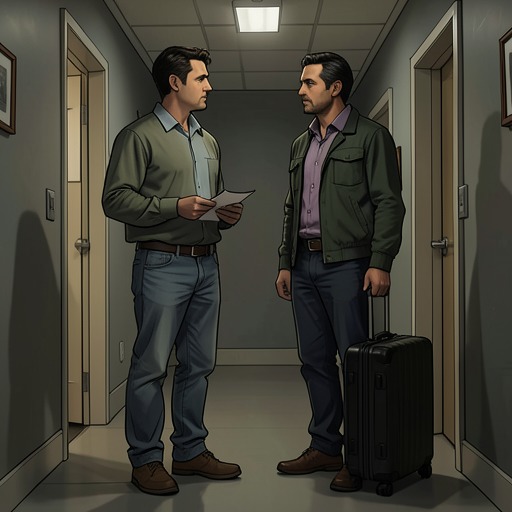
When Tom checks the door, the number above it is 23B, matching the letter. But the student already inside insists that the dean promised him a single and that he has been there for three days without being told he would have a roommate. His expectation directly conflicts with the assignment documented in Tom’s paper; neither student knows why the housing arrangements have put them in the same room.
Tom shows the letter to support his claim. Its physical condition matters: the paper is crumpled from being carried in his wallet for two months, a small record of how closely he has held on to the assurance it gave him. As the other student reaches for it, Tom almost jerks it away. He then reminds himself that he is back at school and no longer needs the document to prove that fact to himself, and lets go of it. The letter shifts, in that moment, from a private talisman of return to evidence shared with a stranger.
Immediate Consequences
The document settles the room number for Tom but does not settle the conflict. It is Sunday night, nine o’clock, and no one can straighten out the housing mistake until morning. Tom suggests that the two of them can wait until then, while the student remains distressed and doubts the explanation. The letter provides a basis for Tom to stay for the night, not an assurance that the student’s promised single will be available or that their assignment will change.
Its promise also meets Tom’s wish to disappear from public attention. After months when he could hardly go outside without being swarmed by people, he wants a quiet, anonymous single in an off-campus dorm where no one knows him. Instead, the paper bearing the room number he had cherished brings him into immediate contact with a roommate and an unresolved institutional mistake. The letter thus secures Tom’s return in one sense while exposing how little control that hard-won return gives him over the conditions he finds on arrival.